
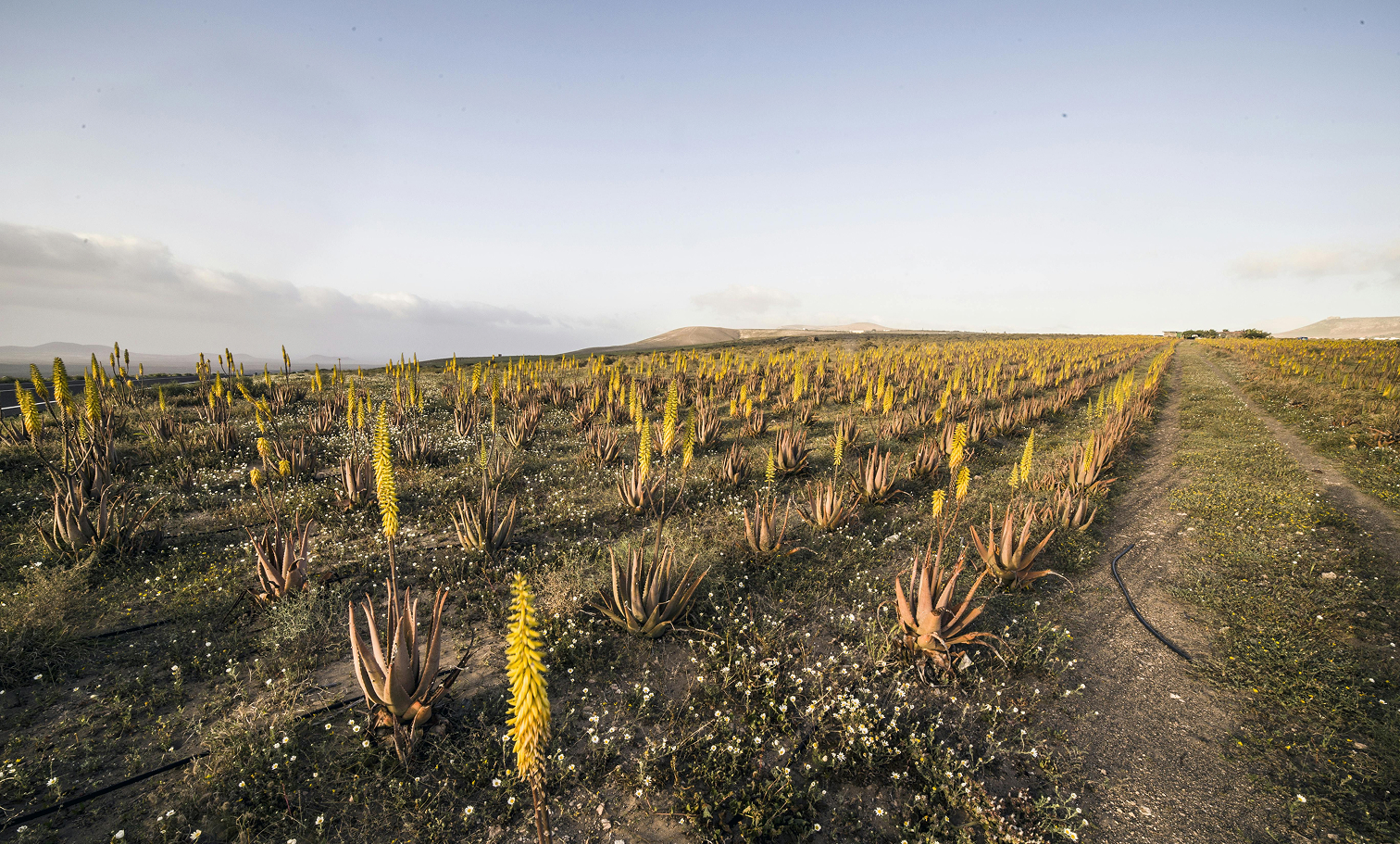
The aloe vera plant thrives in the harshest environment you can imagine: blazing sunshine and weeks on end without a drop of rain.
And in this climate, it doesn’t just survive—it grows, flourishes, and stores one of nature’s most powerful gels in its leaves. Now the question is: How does it do that? And above all, how does it help us?
This perennial plant, tough and thorny on the outside yet translucent and rich on the inside, has been a companion to humankind for over 4,000 years precisely because it learned to survive where other plants could not.
And in doing so, it has developed an arsenal of biologically active compounds that are exactly what our skin needs when faced with the sun, dryness, or wind.
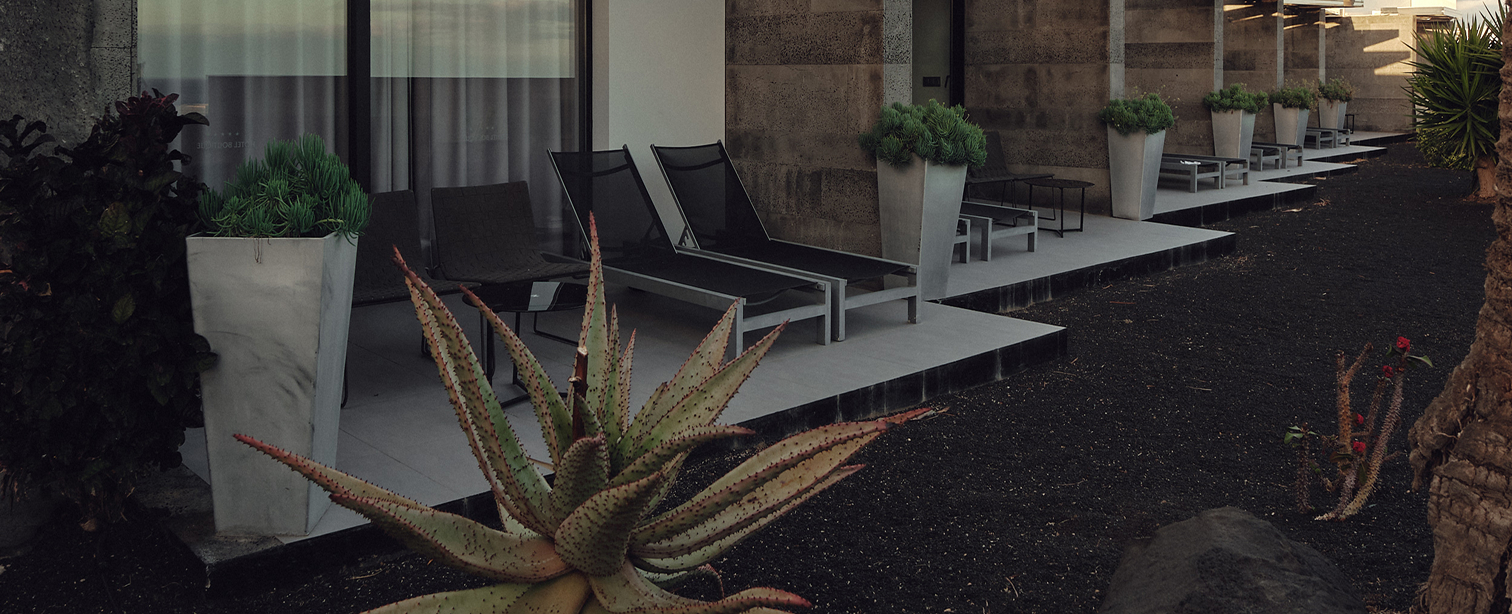
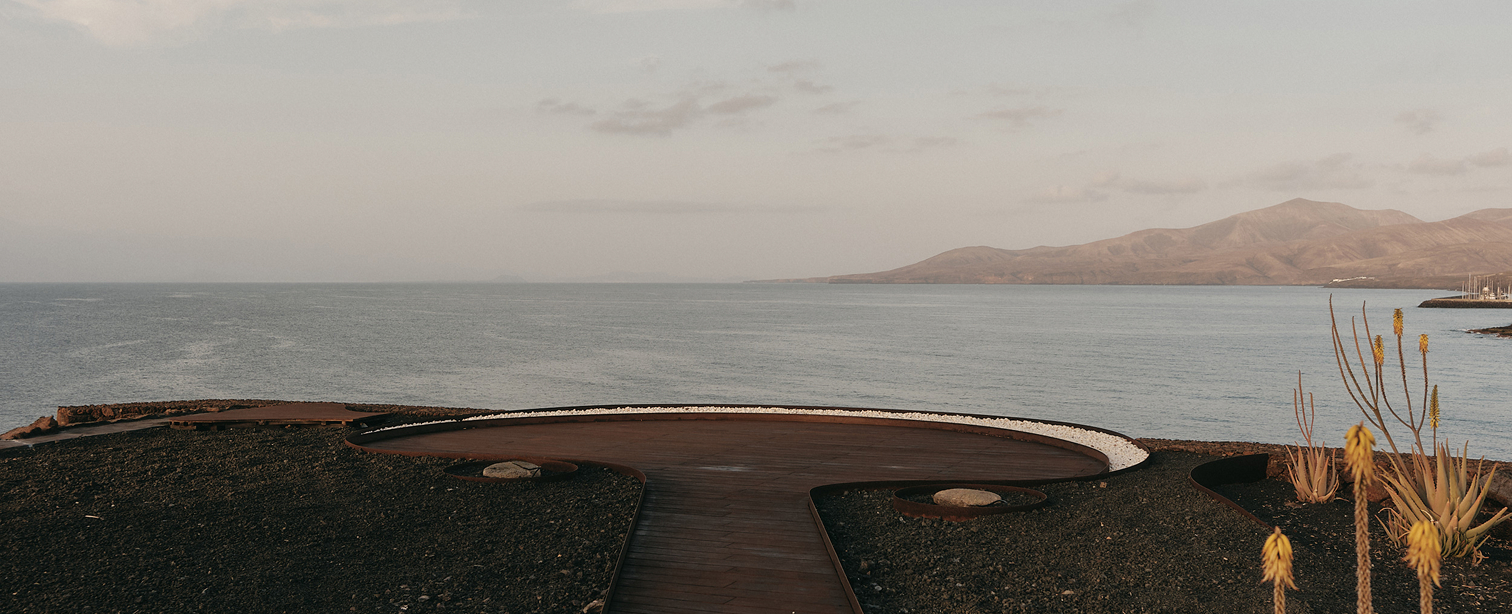
In Lanzarote, that connection has a special flavor. The Canarian aloe vera plant grows in volcanic soil, under a relentless sun that is its constant companion, and with hardly any rain throughout the year.
Exactly the same conditions that affect us when we're on the island. And what the aloe has learned to do for itself, it can do for you, too.
What is the aloe vera plant?
Aloe vera (whose scientific name is Aloe barbadensis Miller) is a perennial succulent plant belonging to the Asphodelaceae family.
It originated in North and East Africa, although it has been naturalized for centuries in the Canary Islands, the Mediterranean basin, and virtually all subtropical and tropical regions of the world.
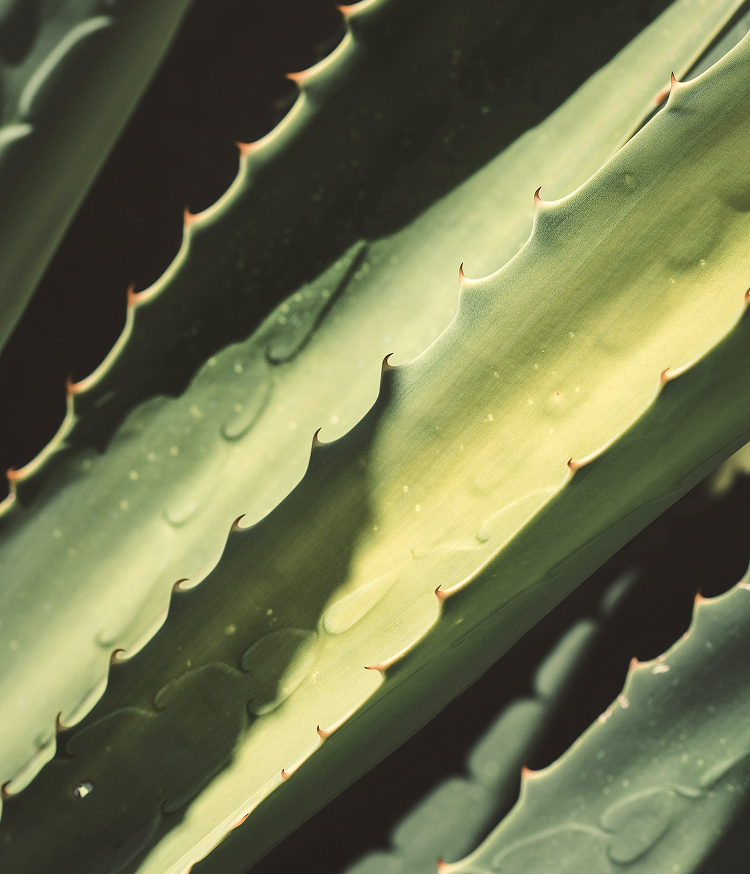
Its long, fleshy leaves with serrated edges are the heart of it all. Inside, they contain two completely different products: the sap, a bitter yellow resin found near the skin, and aloe vera gel, the clear, gel-like liquid extracted from the inner pulp thatcontains more than 200 biologically active substances.
A plant with a 4,000-year history
Aloe vera isn't just a fad. It is one of the oldest documented medicinal plants in human history.
The Ebers Papyrus (Egypt, 1500 B.C.) already contained medicinal recipes featuring aloe. The Egyptians called it “the plant of immortality” and used it in the funeral rites of their pharaohs. Hippocrates, Dioscorides, and Galen, the fathers of Western medicine, mentioned its properties in their writings.
In the 8th century, the Arabs cultivated vast tracts of aloe and spread its use throughout the Mediterranean.
When Christopher Columbus stopped in the Canary Islands before setting sail for the Americas in 1492, he stocked up on aloe vera plants for his ship’s crew. The story goes that he used them to treat sunburns and wounds during the long voyages.
We could go on like this for hours if we looked for references to this plant throughout history, but let’s see what makes it so important.
The secret of aloe: surviving where nothing else does
To understand why aloe vera protects us, we first need to understand how it protects itself. Because it’s no coincidence: the very mechanisms the plant uses to survive in extreme conditions are the ones that benefit us when we apply it.
Drought: The Art of Water Conservation
Aloe vera is a succulent plant, which means it has evolved to store water in its cells so it can survive for months without rain. Its fleshy leaves act as a reservoir of moisture. When you apply it to your skin, that same ability to retain water works in your favor.
Aloe vera gel contains polysaccharides (particularly acemannan) that act as natural moisturizers: they retain water in the skin's outer layer and prevent it from evaporating.
The result? Deep hydration without any greasy feeling—it absorbs instantly and leaves your skin soft and supple.
The Sun: Make Your Own Sunshade
Living under intense sunlight without protection would be fatal for any living creature. Aloe vera has adapted by developing antioxidant and anti-inflammatory compounds that neutralize the damage caused by ultraviolet radiation at the cellular level.
When that same sunburned skin comes into contact us aloe vera gel, something incredible happens: the plant’s polyphenols and aloins limit oxidative damage, vitamin E acts as an antioxidant, and the polysaccharides reduce the inflammatory response.
According to a review published in the International Journal of Medicine, aloe vera gel may help reduce inflammation and soothe irritation caused by sun exposure.
The Wind: Repairing What the Environment Breaks
Wind dries out the skin, causes it to crack, and accelerates water loss. For aloe, wind is a constant challenge, especially in Lanzarote, where the trade winds blow year-round.
And how has nature solved this problem? By developing lignin, a compound that allows it to penetrate tissues and transport the remaining nutrients to the innermost layers.
In human skin, the lignin in aloe works in the same way: it acts as a carrier, helping the other active ingredients reach the deeper layers of the epidermis and repair the damage caused by wind and cold.
Aloe vera gel: the treasure inside the leaf
When people talk about aloe vera, they are usually referring to the gel: the clear, gel-like liquid found in the inner pulp of the leaves. This should not be confused with the sap, the yellowish, bitter resin found between the green outer skin of the leaf and the inner gel, which has completely different properties and uses.
High-quality aloe vera gel, in its pure form, is colorless, almost odorless, and has a smooth consistency. When applied to the skin,it absorbs in seconds without leaving a sticky residue, providing an immediate sensation of freshness and hydration.
The quality of the gel depends largely on the extraction process. Pure gel that has been cold-stabilized—without the use of concentrates or high-temperature processes—retains most of its active ingredients.
This is especially important when looking for pure aloe vera for cosmetic or dietary use.
Aloe vera in Lanzarote and the Canary Islands: why ours is different
The Canary Islands are Europe's leading region in aloe vera production. And within the archipelago, Lanzarote stands out: on the island alone, more than150 hectares of aloe are cultivated, with an annual production exceeding 6 million kilograms.
But quantity isn't the most important thing. What makes aloe vera from Lanzarote and the Canary Islands special is its concentration of active ingredients.
According to various studies and specialized producers, Canary Island aloe may contain up to three times as many active ingredients as aloe grown in other parts of the world.
penetrate the tissues and transport the remaining nutrients to the innermost layers.
Why is Canarian aloe vera so potent?
The answer lies in the exact conditions under which it grows. And in the paradox it embodies: the harsher the environment, the harder the plant works, and the more concentrated its active ingredients become.
- The volcanic soil—porous, slightly acidic, and rich in volcanic minerals—provides exceptional nourishment for the plant and drains excess water quickly, preventing waterlogging that damages the roots.
- The high amount of sunlight and stable temperatures throughout the year allow for continuous and optimal plant growth.
- Due to low rainfall, the plant is forced to maximize its water-retention mechanisms by concentrating polysaccharides in its leaves.
- The trade winds, which are constant and dry, are another stress factor that stimulates the plant to produce more protective compounds.
- The moisture in the air from the Atlantic provides just the right amount of hydration without being excessive.
In short: Lanzarote’s aloe vera faces exactly the same challenges we do on the island—the sun, the wind, and drought—and has turned them into superpowers.
When you apply it to your skin, you’re using nature’s response to those very conditions.

