
Some islands have scenery, but others have a vision. Lanzarote has both, but the latter didn't just appear out of thin air.
He arrived with a man who decided that the untamed beauty of his homeland was not a foundation to build upon, but the raw material itself.
César Manrique was born in Arrecife in 1919. He died in Lanzarote in 1992. During that time, he forever transformed the way an island can relate to its own identity.
An artist who chose to return
In the 1960s, Manrique was living in New York. He had also spent time in Madrid, rubbing shoulders with Warhol and the international art world. He had everything he needed to stay in those big, bright cities. And yet, he returned.
The decision to return to Lanzarote was a statement. Manrique realized that the most extraordinary place in the world where he could and wanted to work was precisely the one that no one was paying attention to.
A volcanic island between Africa and Europe that was just beginning to attract mass tourism, with all the risks that entailed.
And what he set out to do—and ultimately achieved— would completely transform the island.
The work of César Manrique: where art and nature come together
To speak of César Manrique’s work in Lanzarote is not to speak of paintings in a gallery. It is to speak of an entire island as a work of art.
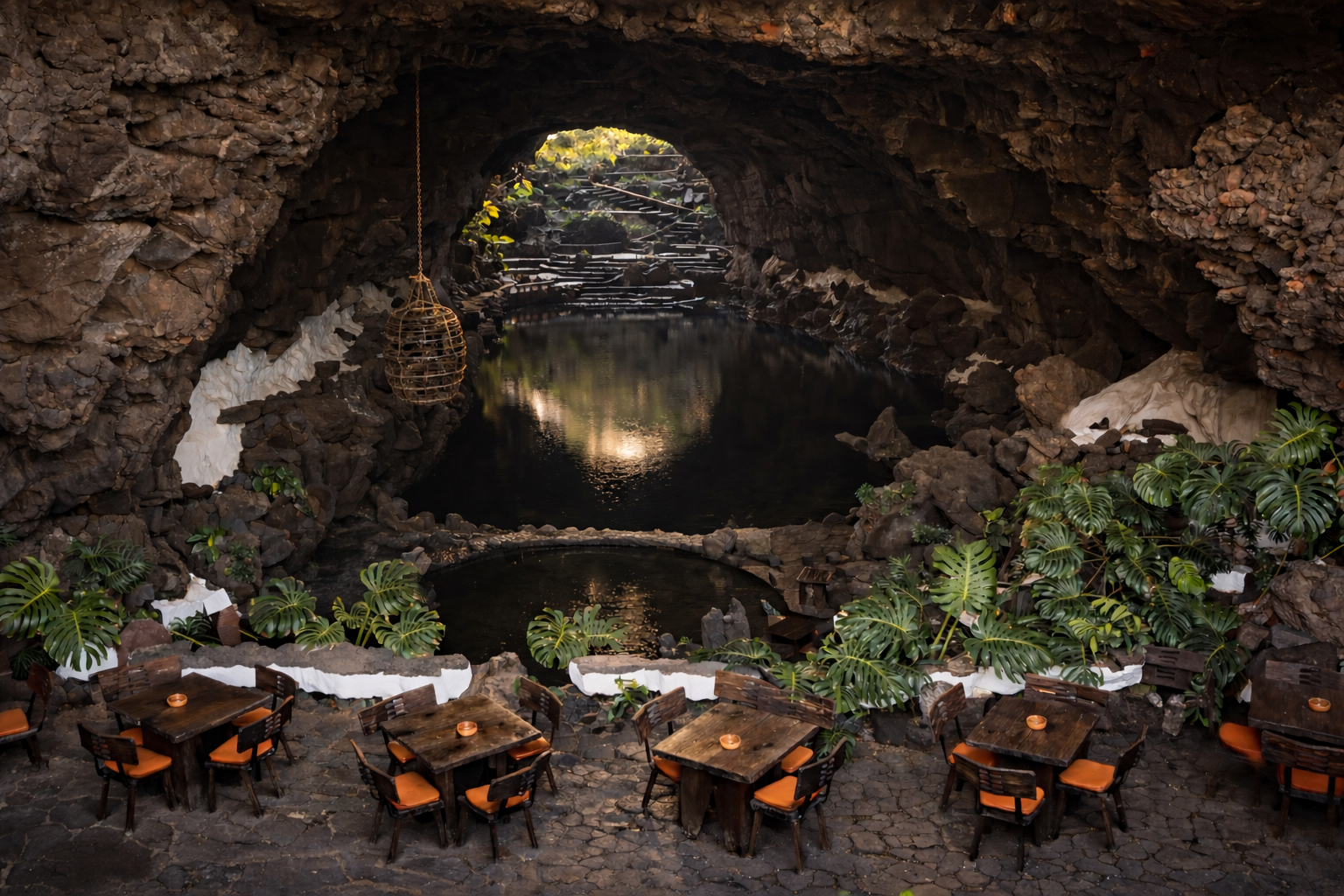
His designs do not compete with the landscape; they emerge from it. The Jameos del Agua originated from a lava cave and the ocean that floods it, and Manrique transformed it into an auditorium, a garden, and a space for contemplation without altering the terrain any more than was necessary.
Today, Los Jameos is one of the most photographed sites in the Canary Islands, and it remains exactly what the volcano left behind—only enhanced by an artist’s vision.
The Mirador del Río overlook offers visitors a view of the strait separating Lanzarote from La Graciosa. The building does not compete with the views; rather, it blends seamlessly into them.
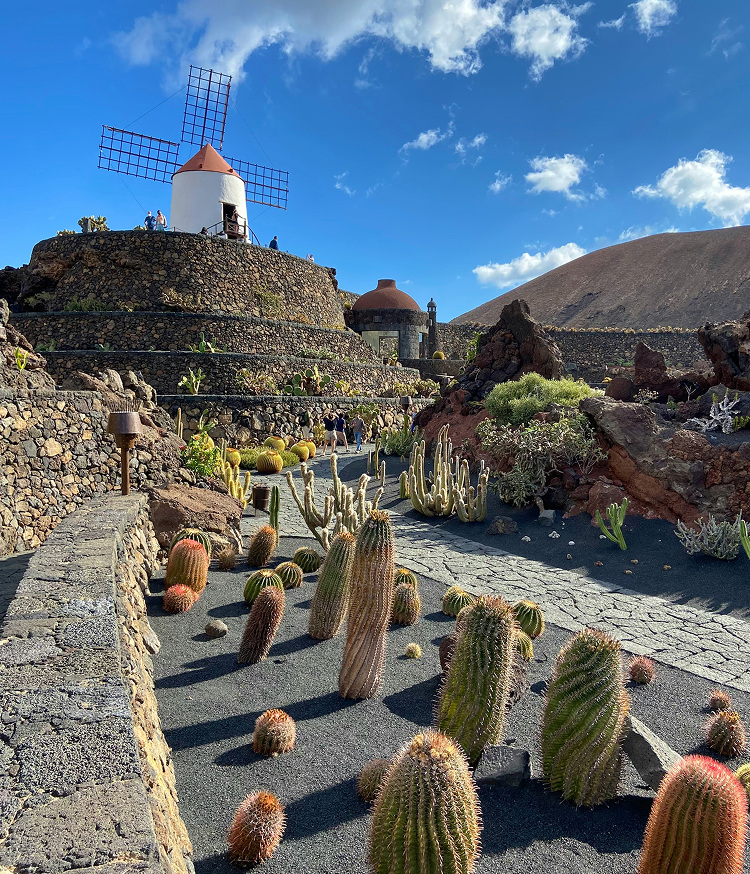
And the Cactus Garden transformed a volcanic sand quarry into a botanical garden where more than 1,400 species of cacti grow alongside the volcanic rock that surrounds them.
Each of César Manrique’s works of art on the island follows the same principle: nature takes the lead, and art follows.
The César Manrique House-Museum: Living Inside the Volcano
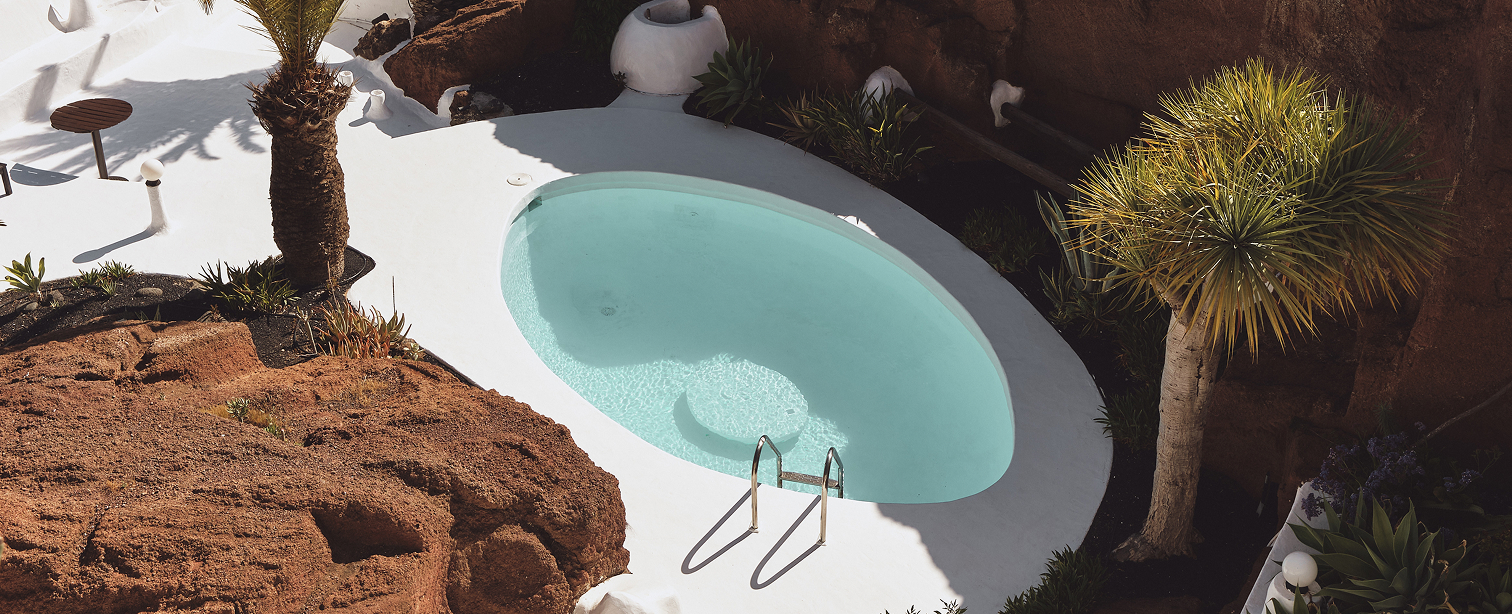
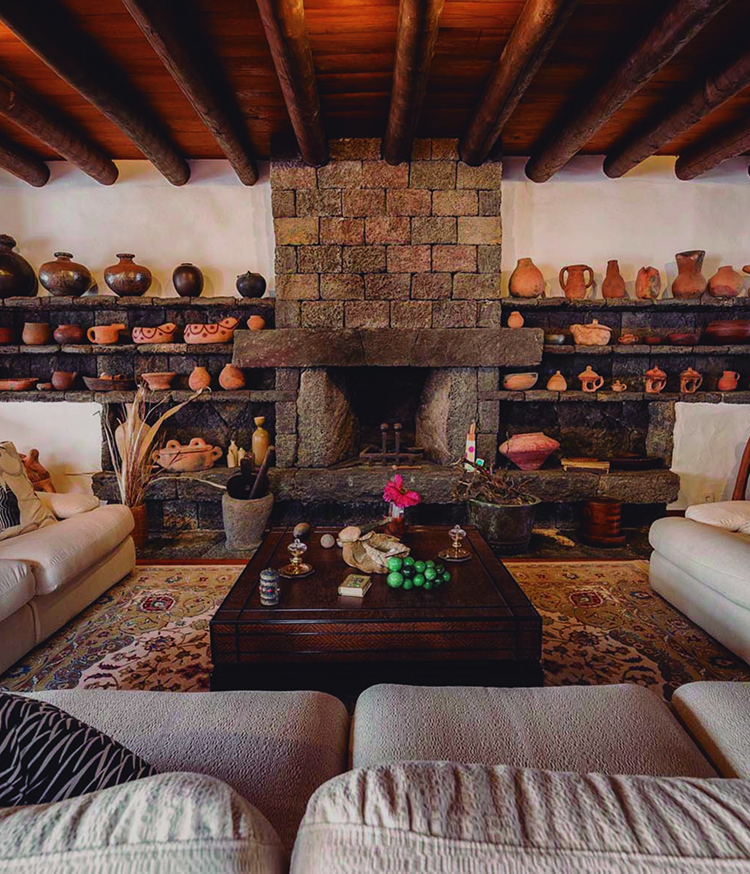
Of all César Manrique’s works, the most revealing is the one he built for his own private use. The César Manrique House Museum was built on top of five natural volcanic domes in Tahíche.
The César Manrique House didn’t dominate the landscape. It slipped right into it. Each bubble became a different room: the kitchen, the living room, the black-painted pool, a play area complete with a palm tree… All connected by corridors carved into the rock, illuminated by the light filtering through the lava.
Visiting it today means experiencing firsthand what Manrique meant when he spoke of landscape and architecture becoming one.
Today, the César Manrique Foundation preserves this legacy and keeps it alive as an active cultural space, offering exhibitions, educational programs, and safeguarding his body of work.
César Manrique's works in Lanzarote: a tour that is also a philosophy
Exploring César Manrique’s works in Lanzarote isn’t your typical tourist visit. It’s a journey through the island’s history.
Jameos del Agua and Cueva de los Verdes show how prehistoric fires created tunnels that will amaze you today.
The Mirador del Río frames the horizon with a painter’s precision. The Cactus Garden in Guatiza brings the experience full circle with a statement on the beauty of the arid landscape. And the Monument to the Peasant, in the center of the island, pays tribute to those who worked the land for centuries to make Lanzarote what it is today.
As a point of interest regarding Manrique’s influence on the island, the artist spearheaded the law banning billboards along Lanzarote’s roads, championed traditional white architecture with green and blue window frames, and fought against housing developments that threatened to erase the island’s visual identity.
His works of art were not merely aesthetic objects. They were a struggle to preserve the essence of Lanzarote.
How to Explore César Manrique's Work in Lanzarote
If you're traveling to Lanzarote, César Manrique's works on the island are well worth exploring.
But to make things a little easier, a good place to start exploring them would be the César Manrique Foundation in Tahíche, where the house-museum provides the context needed to understand everything else.
Los Jameos del Agua is particularly striking at sunset, when the light changes the color of the inner lake. The Mirador del Río is best enjoyed over a leisurely morning. And the Cactus Garden never fails to surprise, even those who have been there before.
But as you may have noticed, there is no single “right” itinerary—only one that invites you to take your time and truly look into the soul of an artist and an island that have become forever intertwined.
The legacy that Aylanz acknowledges
At Aylanz, we share Manrique’s conviction that development and respect for the environment not only can coexist, but must.
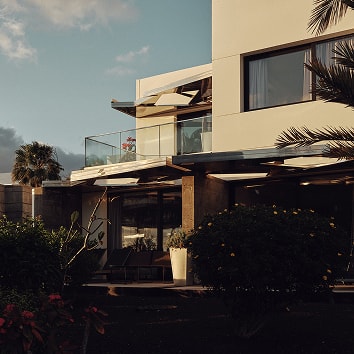
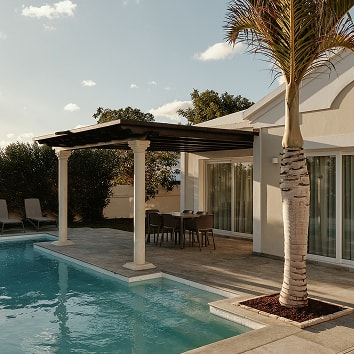
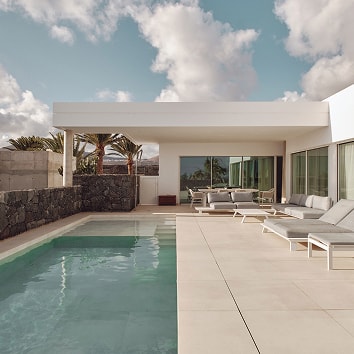
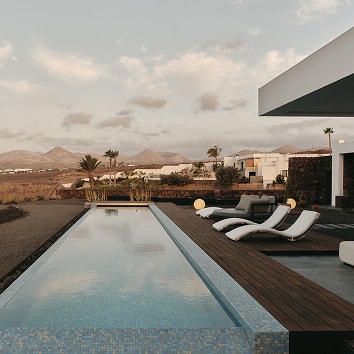
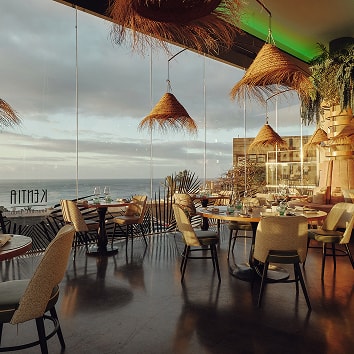
Our accommodations are rooted in the local area. La Isla y el Mar overlooks the Atlantic from a bioclimatic architecture that respects the island’s scale and materials. The Villas Elements offer a minimalism that does not impose itself, but rather listens to the landscape.
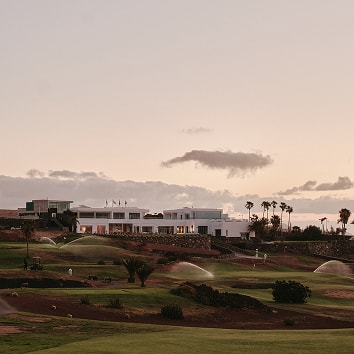
The course , designed to embrace the volcanic terrain, preserves the original features of the land rather than erasing them.
It is a conscious commitment to enjoy the island and understand the Lanzarote that Manrique sought to immortalize in his art.

