

There are people who shape the world with their own hands and don’t ask anyone to remember their name. Jesús Soto was one of them. If you find yourself speechless today when you see the Cueva de los Verdes, the Mirador del Río, or the Jameos del Agua, you owe it all to him.
When people talk about Lanzarote and its unique identity—with its harmonious blend of volcanic landscapes, architecture, and art— the name that always comes up is César Manrique. And with good reason, since Manrique was a genius who transformed his native island into a living work of art. We’ve already discussed him in depth in our article on César Manrique and Lanzarote’s artistic legacy.
But there is another name that always goes unnoticed in the news, museums, or travel guides—and without him, we probably wouldn’t be able to enjoy many of the works we have on the island, at least not as we know them today. And that name is Jesús Soto.
But who was Jesús Soto Morales?
Jesús del Carmen Soto Morales was born in Fuerteventura in 1928, but it was Lanzarote that became his home, and to which he devoted his entire life, his talent, and his vision.
What makes this man's story particularly fascinating is that he didn't arrive on the island as an architect or a renowned artist. He started out as a young electrician who repaired the radio transmitters on fishing boats.
But there was something different about him. He was self-taught, a voracious reader, and passionate about nature.
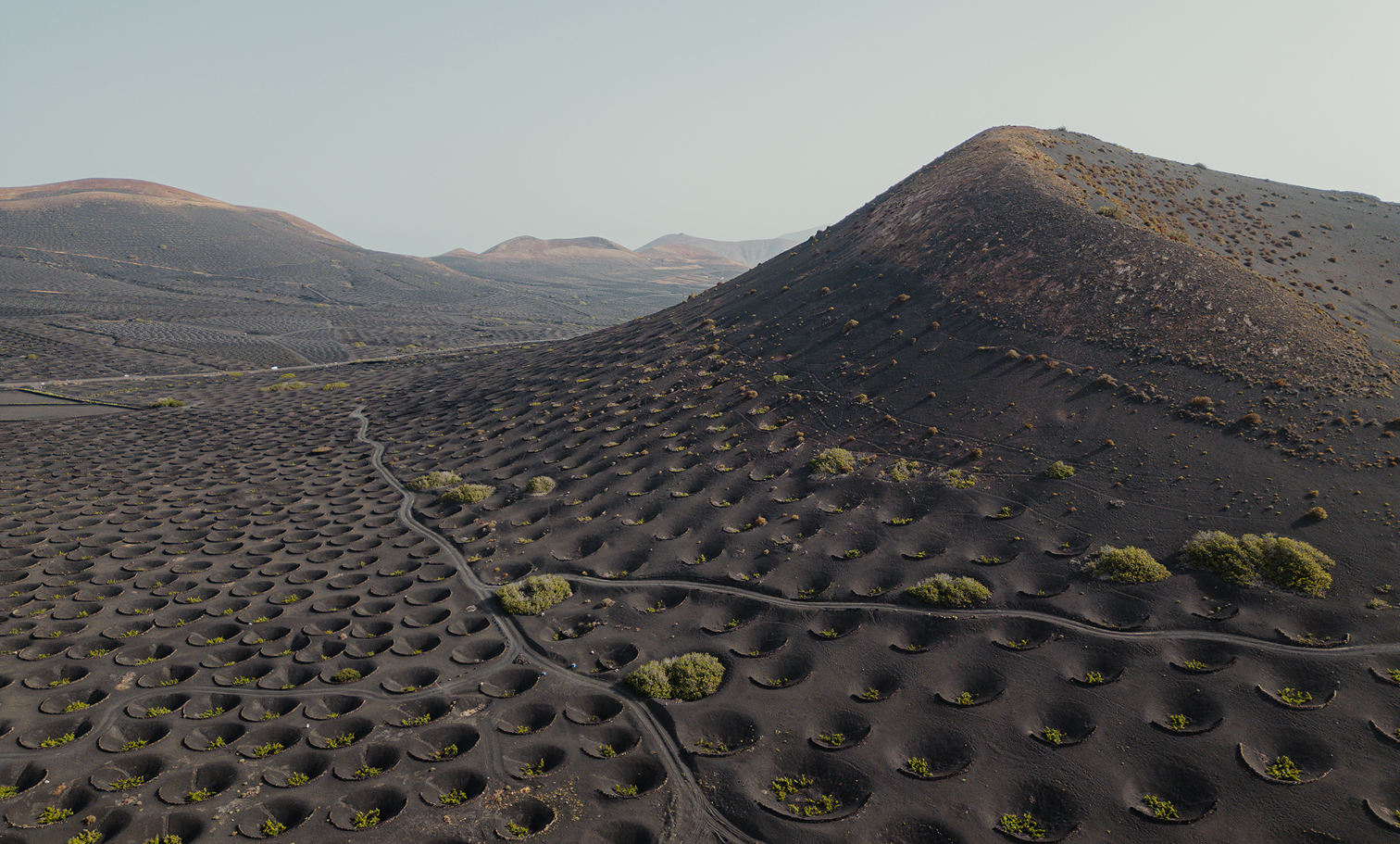
And it was precisely that way of seeing the world—unencumbered by the limitations that a formal education might have imposed— that allowed him to see what others (with the exception of Manrique) did not see on the island: the lava, its caves, and the landscape that others viewed as an obstacle but which he saw as a canvas on which to work.
The moment that changed everything: the Cueva de los Verdes
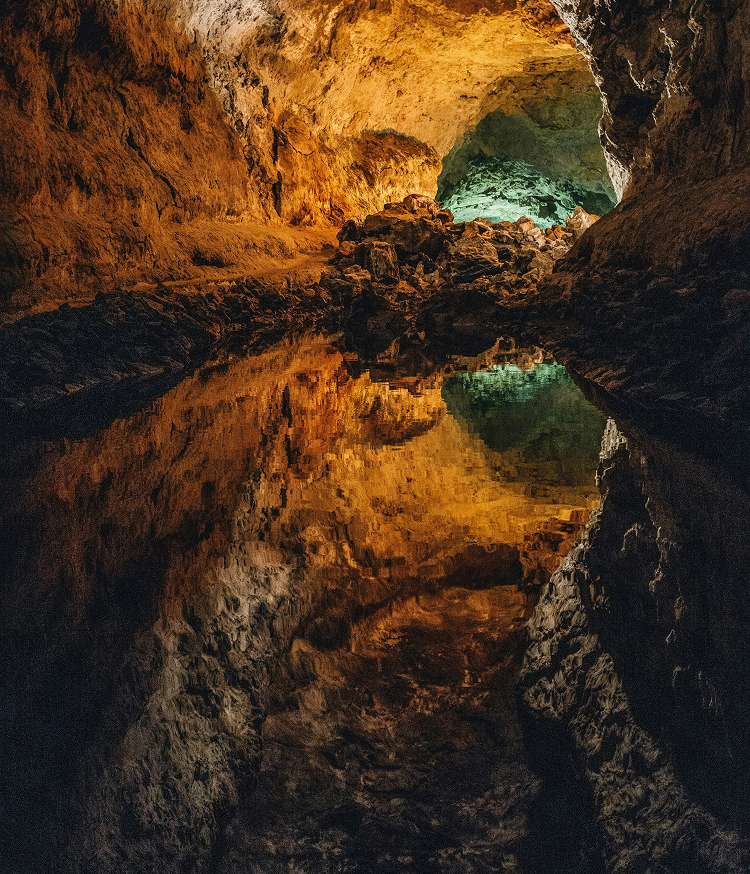
Everything would change in 1963, when the Cueva de los Verdes was still just an 8-kilometer-long “tunnel” eroded by lava.
A historian and a photographer wanted to explore this site in search of indigenous remains, but they needed someone to help light their way during the investigation.
That person happened to be Jesús Soto, who showed up with his team of electricians to do another job—and who would leave the Cueva de los Verdes a completely changed man.
What followed this venture was one of the most significant architectural and lighting projects in the history of landscape architecture.
He designed a lighting and sound system for nearly 2 kilometers of the route that is open to the public, and to top it all off, he created an auditorium deep within the island.
An auditorium that experts agree is one of the best-sounding venues in the world— and it must be, given that artists like Mark Knopfler consider it one of their favorite places to perform.
The lighting (after all, I used to be an electrician) doesn’t hide the cave; rather, it brings it to life: reddish, yellow, and black hues add texture to that rock frozen in time.
The partnership that shaped Lanzarote: Soto and Manrique
In the 1960s, another islander, César Manrique, was at the height of his career. He lived in New York, surrounded by galleries and avant-garde art, and was already regarded as a cult artist among his peers.
And what could have brought her back to Lanzarote? Jesús Soto and the island’s magnetic pull on anyone who visits it.
Thus, beginning in 1968, the two artists worked together on the construction of the Centers for Art, Culture, and Tourism in Lanzarote. Manrique contributed his artistic touch, while Soto handled the technical aspects to ensure that these grand ideas could be brought to life.
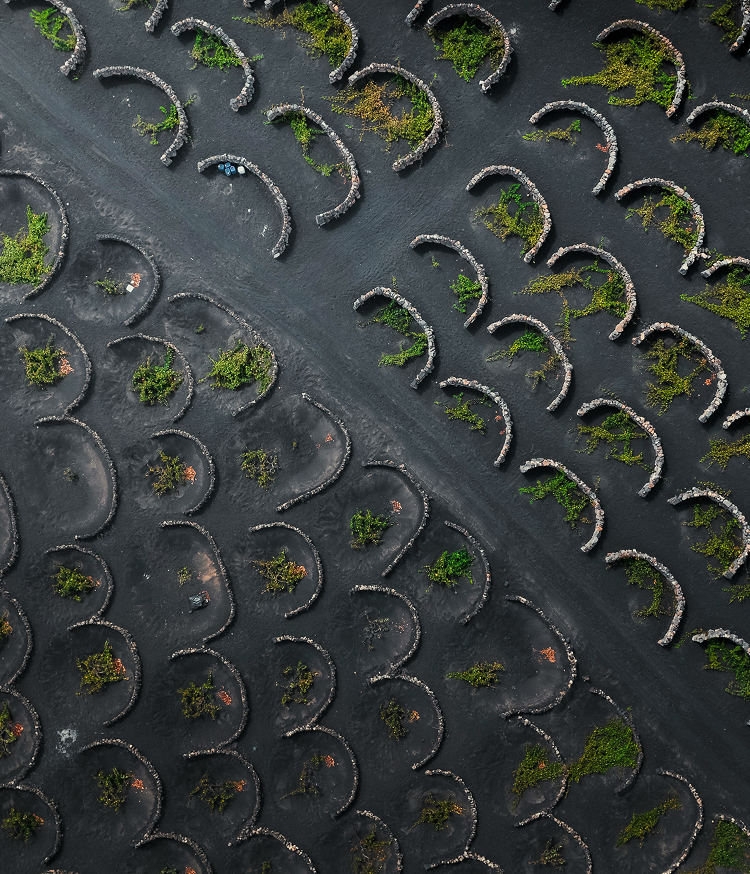
And together, they also worked according to the same philosophy: to leave no trace on the island. Their work was meant to make nature more beautiful, not to destroy it.
The Works of Jesús Soto in Lanzarote: An Invisible Heritage
And it is precisely this philosophy that sometimes makes his work so inconspicuous. His creations made nature the star of the show, and that was precisely why they were so successful: they gave the impression that no human hand had ever touched them.
But once you know what to look for, you see Soto’s signature everywhere. He produced many works, though some of the most important ones were:
-
- Cueva de los Verdes: his first project in the interior of Lanzarote, using lighting and volcanic rock as his tools to create a unique space.
- Jameos del Agua: He designed, lit, and oversaw the artistic direction of this venue, which is now one of the must-see attractions in Lanzarote.
- Monument to the Peasant: He was the lead engineer behind this 15-meter sculpture, which pays tribute to the island’s indigenous inhabitants and celebrates their spirit.
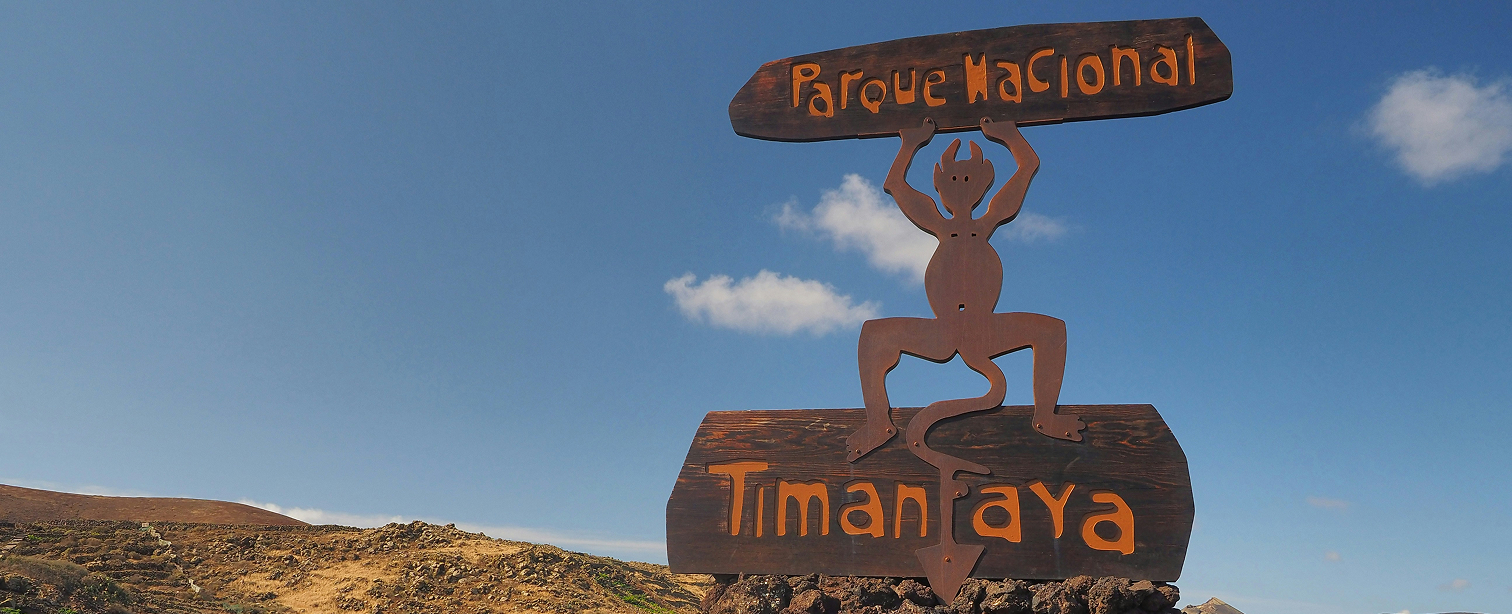
- El Diablo Restaurant (Timanfaya): another iconic spot where they managed to harness the geothermal heat from deep within Timanfaya as an energy source for the restaurant.
- And it is precisely this philosophy that sometimes makes his work so inconspicuous. His creations put nature in the spotlight, and that was precisely what made them so successful: they gave the impression that no human hand had ever touched them
The Visionary of Timanfaya
One of Jesús Soto's most significant contributions was proposing that Timanfaya be designated a national park.
The idea came to him after reading a brochure about New Mexico's natural parks. He spent entire nights outdoors in the Fire Mountains, thinking about how to showcase Lanzarote's volcanic landscape without harming it.
The result was the Volcano Route and the design of El Diablo restaurant: likely the most unique restaurant in the world, where the grill is powered by geothermal heat rising from the ground at a temperature of 600 degrees.
No chef in the world has a kitchen like that, and only Soto made it possible.
Why don't we know Jesús Soto?
The answer is simple: for himself.
According to those who knew him, Jesús Soto was a very modest man. He shied away from any kind of public exposure. He did not speak to the press. He did not seek the limelight. He went about his work quietly, convinced that what mattered was the result, not himself.
While Manrique became the media and artistic icon of Lanzarote, Soto preferred to stay in the cave—almost literally— solving technical problems that no one else could.
In 2002, a year before his death, the Cabildo of Lanzarote decided to break with Soto’s austerity and recognized him as an Adopted Son of the island. It was the official way of telling him: you are one of us.
Today, Lanzarote is an extraordinary island. An island that has managed to preserve its identity in the face of mass tourism. An island that has transformed its volcanic geology into art.
And among all those who made it possible, Jesús Soto was one of the most important figures.
So, the next time you visit Lanzarote and enjoy the play of light in the Cueva de los Verdes, the warmth of the grills at El Diablo, or the beauty of the Monumento del Campesino, remember his name.

