
When people look for things to see in Lanzarote, they usually think of Timanfaya National Park, the Jameos del Agua, or the lookouts overlooking the Atlantic. But there’s another aspect that’s just as important yet often goes unnoticed: the way the island is built.
Lanzarote would not be what it is today without the influence of César Manrique. His vision was not limited to art; rather, he established a way of engaging with the landscape: respecting the volcanic terrain, minimizing visual impact, and building in a cohesive manner. That philosophy not only defined an era but continues to shape how projects are developed on the island.
In this context, La Isla y el Mar, a collection of suites that do not seek to reinterpret Lanzarote, but rather to continue that way of understanding it.
José María Pérez Sánchez: Architecture That Doesn't Seek the Spotlight
When discussing architecture in Lanzarote, the name that usually comes up is César Manrique. His legacy defined a very specific approach to building on the island: respecting the landscape, working with local materials, and avoiding anything that might disrupt the visual harmony. But for that vision to endure over time, one figure alone is not enough. Other professionals must carry it forward using their own artistic language.
José María Pérez Sánchez is part of that generation.
His profile does not fit that of a media-savvy architect or a firm known for a consistent formal style. On the contrary, his work is characterized by something less visible but more complex: adapting to each project and each site without imposing an external aesthetic.
According to La Casa de la Arquitectura, his career is marked by projects in which the relationship between architecture, materials, and the surrounding environment is key. This places him within a strand of contemporary architecture that prioritizes context over form.
In a place like Lanzarote, this isn't a matter of aesthetics—it's a necessity.
Here, any intervention is shaped by very specific factors: the scale of the volcanic landscape, the intensity of the light, the constant presence of the wind, and a well-defined architectural tradition. Ignoring these elements would upset the island’s balance.
Pérez Sánchez’s work in La Isla y el Mar precisely on that interpretation.
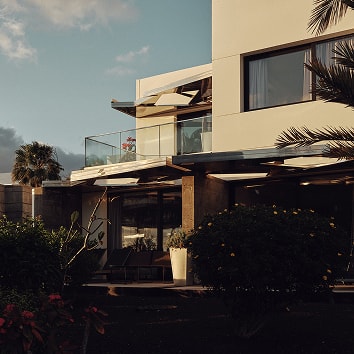
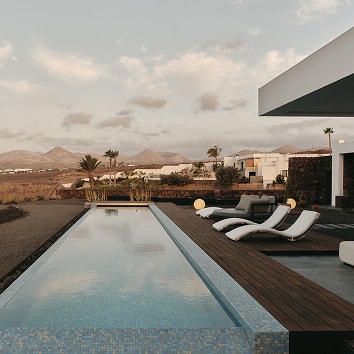
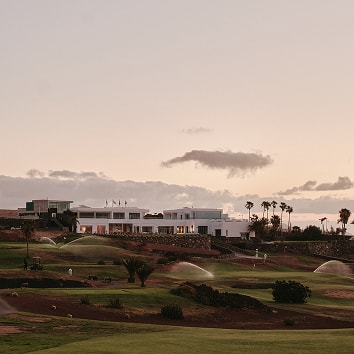
The hotel does not seek to stand out or become an icon recognizable from a distance. Its value lies in the opposite: in blending in, in remaining unobtrusive within the landscape, and in creating an experience that is consistent with the surroundings.
And in Lanzarote, that is probably the most complex form of architecture there is.
Architecture in Lanzarote: A Matter of Balance
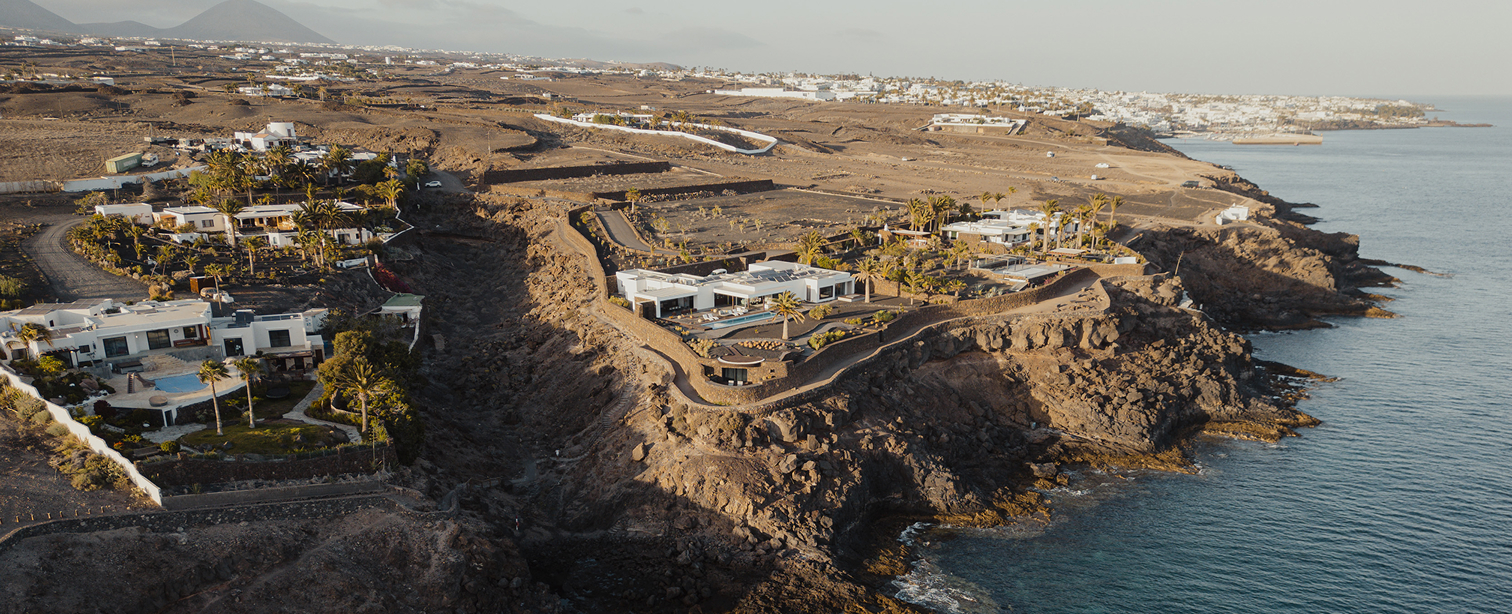
Since the mid-20th century, Lanzarote has followed a development model that is unusual for tourist destinations. In contrast to the uncontrolled growth seen in other coastal areas, the island chose to limit building heights, maintain a consistent aesthetic, and protect its landscape.
This model was not the result of chance. It was the result of a shared vision among artists, technicians, and government officials who understood that Lanzarote’s value lay precisely in its uniqueness.
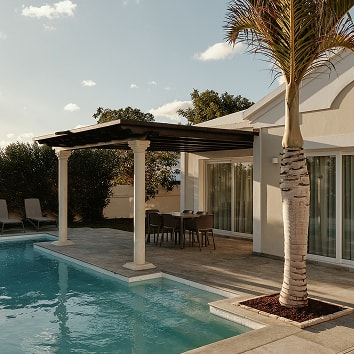
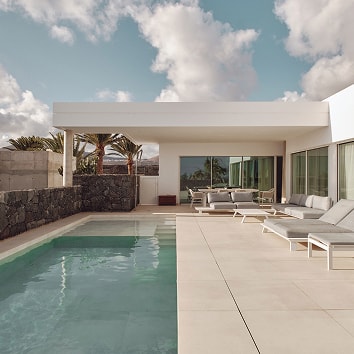
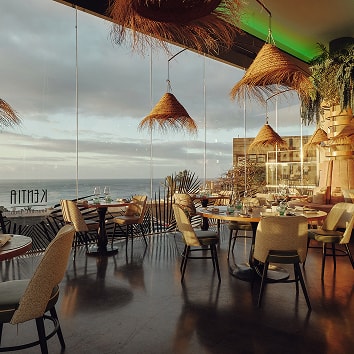
La Isla y el Mar part of that tradition. The hotel is designed with low-rise structures that blend into the topography, ensuring the horizon remains unbroken. There is a constant interplay between indoor and outdoor spaces, which is essential in a climate like the island’s.
Materials that respond to the site
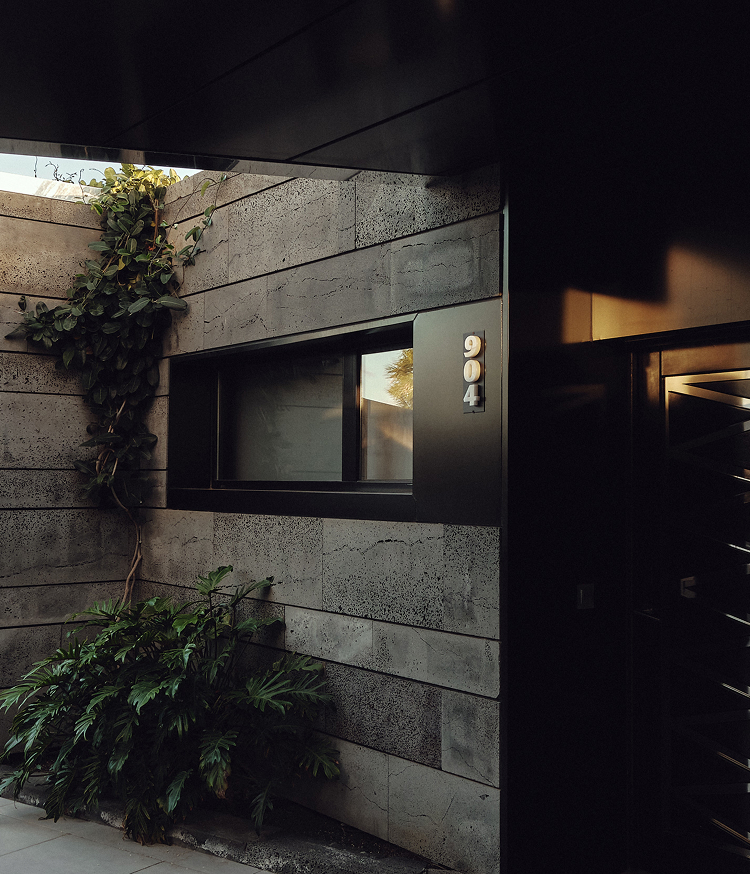
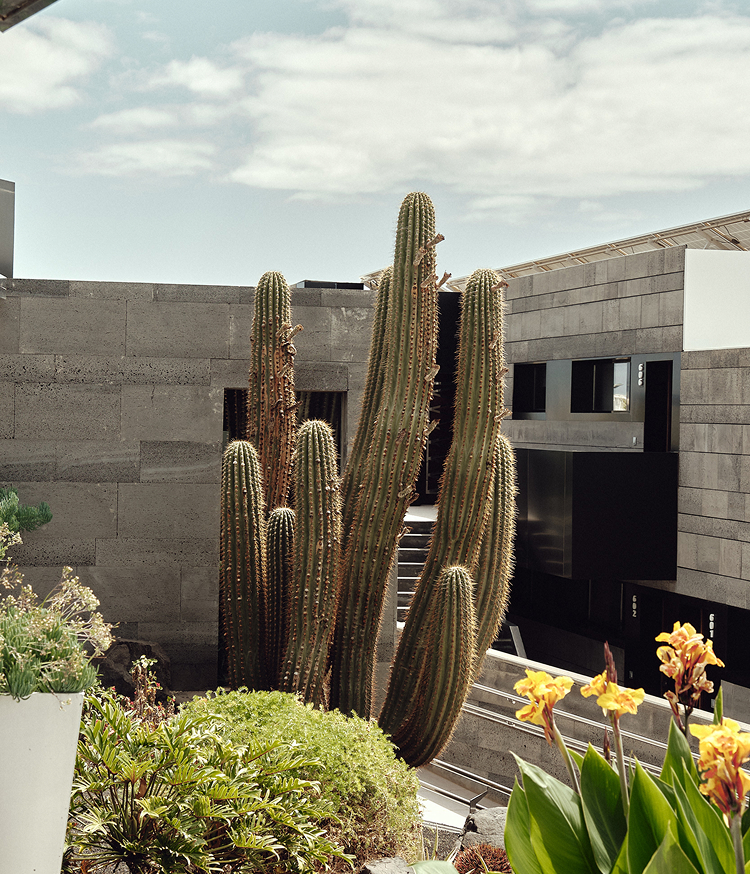
One of the most significant aspects of the project is the use of materials. In Lanzarote, the choice of materials is not merely a matter of aesthetics, but a way of blending into the landscape.
The volcanic stone, which features in many elements of the hotel, is not merely a decorative element. It is part of the island’s architectural language. The same is true of the color palette, which is dominated by whites, blacks, and neutral tones that directly evoke the landscape.
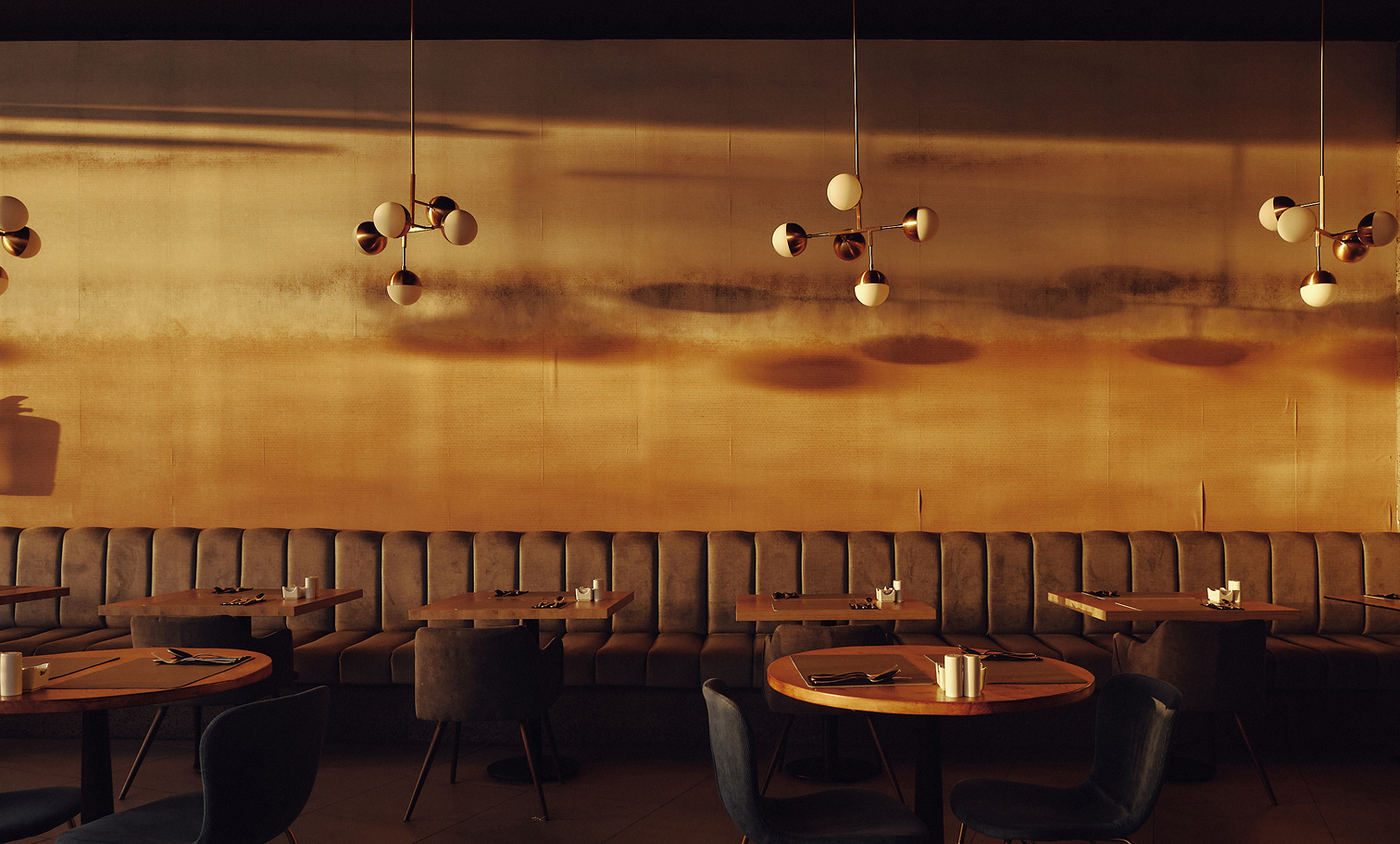
Decisions like these give guests a clear sense that the hotel isn't isolated from its surroundings. It's part of them.
Sustainable tourism in Lanzarote: beyond the rhetoric
The concept of sustainable tourism in Lanzarote is often associated with certifications, energy efficiency, or resource management. And while all of that is important, there is one key factor that is often overlooked: the way in which buildings are constructed.
A building that does not respect its surroundings can hardly be considered sustainable, no matter how efficient its systems may be.
In the case of La Isla y el Mar, sustainability begins with the design. It starts with how the building adapts to the terrain, how it minimizes its visual impact, and how it incorporates architectural solutions tailored to the island’s climate.
This approach aligns directly with current trends in tourism: spaces that are more sustainable, more integrated, and offer a greater sense of place.
Architecture is another way to experience what Lanzarote has to offer
More and more travelers are looking not just for places to visit, but for meaningful experiences. In this sense, accommodations are no longer just a secondary consideration; they have become an integral part of the trip.
When searching for terms like “what to see in Lanzarote” or “what to see on Lanzarote,” a new need emerges: to understand the destination from the inside, not just to tour it.
On an island like Lanzarote, where the landscape is so striking, this becomes even more important. Staying in a place that ignores its surroundings is not the same as staying in one that embraces them.
La Isla y el Mar to experience the island from within—not as a spectator, but as part of the landscape itself.
Aylanz's role: managing with consistency
At Aylanz, we operate with a clear vision: every property must be in harmony with its surroundings.
This means respecting the environment, understanding its identity, and making decisions that create long-term value—not only economic value, but also cultural and landscape value.
La Isla y el Mar a prime example of this approach. It is a project in which the design does not seek to stand out, but rather to blend in. Sustainability is not an afterthought, but an integral part of the initial concept.
Because in Lanzarote, sustainable tourism is more than just a concept.
It's just one way of doing things.

